

by Leon Ashcombe
Share
by Leon Ashcombe
Share
The secret behind a successful trade is not just finding the right entry point but also knowing when a position should be exited. This is where the significance of stop loss and take profit strategies comes into play. A stop loss allows traders to limit losses when the market is not in their favor, while a take-profit order locks in profit before the market reverses. In these ways, both these strategies support effective risk management. When used the right way, they can help improve long-term consistency in trading.
Why Exit Strategies are More Important Than Entries?
Often, traders, especially beginners, spend time looking for the perfect entry points. However, professional traders are well aware that a bad exit can ruin even the best trading setup.
What happens when there is no stop loss is that small losses quickly become big. Similarly, the lack of take-profit can lead to profitable trades reversing before gains are secured.
As you know, markets are fast-moving, and emotions such as greed and fear make people make impulsive decisions. A well-planned exit strategy helps eliminate emotional pressure and supports a more disciplined approach.
Understanding Stop Loss Orders
When a market reaches a specific price level, the stop-loss strategy automatically closes a trade. The main purpose of this tool is to prevent risk and reduce major losses. Experienced traders enter a trade only after deciding where a stop loss should be fixed because they prioritize risk management.
Different Ways Stop Loss Orders are Used
There are different ways of using stop losses depending on the market conditions and trading style. Let us look at each of them:
Percentage-based stop loss
Beginners mostly use this stop loss strategy. They risk a fixed percentage on every trade, usually between 1% to 2%. The positive of this method is consistency. Traders can control losses, and they don’t have to risk too much on a single trade.
Technical stop-loss
Instead of a fixed percentage, experienced traders use chart structures. Using this method, they keep stop losses below support zones or above resistance levels. This allows users to move more naturally while still protecting against trend reversals.
Volatility stop-loss
Sharp price movements are common in markets in crypto and forex. To tackle such situations, traders use volatility indicators like Average True Range (ATR)to fix wider and more realistic stop-loss levels. This helps avoid getting interrupted by temporary market noise.
Issue With Tight Stop Losses
A common mistake is placing stop losses too close to the entry price. Such tight stops may lower risk, but they might close trades too early before the market gets time to develop.
Financial markets are subject to fluctuations. Even during strong trends, small pullbacks might occur. Traders who place tight stop losses often experience frequent losses despite having clarity about the market direction.
The purpose of a good stop loss is to protect capital without suffocating the trade.
Understanding Take Profit Orders
Once a target profit level is reached, the take-profit order closes the trade automatically. Before market direct changes, it allows traders to lock in gains. It helps eliminate emotional decision-making and reduces the tendency to remain in a trade for too long.
Take-Profit Methods Used by Experts
Professionals use several take-profit methods to protect capital and earn consistent profits. These include:
- Risk-to-reward targeting
- Scaling out of trades
- Trailing profit strategies
Combining Stop Loss and Take Profit Effectively
The best trading setups are those that combine both stop-loss and take-profit orders effectively. When a trader enters a position, they should know about the following aspects:
- Maximum acceptable loss
- Expected reward target
- Market conditions
- Risk-to-reward ratio
This contributes to a structured plan and prevents irrational decision-making.
Adapting Strategies to Different Markets
One thing to note is that the requirements of each market are different. So, strategies should be used accordingly.
- Forex trading requires tighter stop losses because currency pairs move in smaller ranges.
- Wider stop losses and trailing strategies are common in the crypto market, as it is highly volatile.
- To place stop losses and take profits, stock traders often depend on resistance levels and technical support.
So, it is evident that understanding market behaviour is important in deploying the right strategies in different markets.
Conclusion
Stop loss and take profit are crucial tools for traders and investors. They support long-term investments in different markets. The secret to successful trades is not chasing big wins but effective risk management. Traders who manage losses, secure profits wisely, and follow the right exit strategies perform better over time in comparison to those who trade emotionally.
Just a reminder that no strategy guarantees success in every trade. That being said, having a proper stop loss and take profit strategy can help remain consistent, prevent unwanted losses, and develop a more professional trading approach.
STAY IN THE LOOP
Subscribe to our free newsletter.
Leave A Comment

Most financial markets experience unexpected rises and falls, making investing quite complex. Most newbies struggle with the question, ‘When is the best time to invest?’ This is where the relevance of dollar-cost averaging comes. It is a simple investment approach that helps lower emotional decision-making and market timing risks. Keep reading to find out more

In personal finance and investing, compound interest is an important concept. It helps people earn interest on their original money and also on the interest already added, thereby allowing savings to grow faster. Over the long term, compound interest helps turn small investments into large sums. Whether you are into stock trading, saving for an

Proper position sizing is one of the major factors contributing to long-term trading success. Even the best strategy doesn’t work without effective risk management. It is important to know how much money to risk per trade to safeguard your capital, boost long-term profitability, and reduce emotional biases. Position sizing is fixing how large your trade
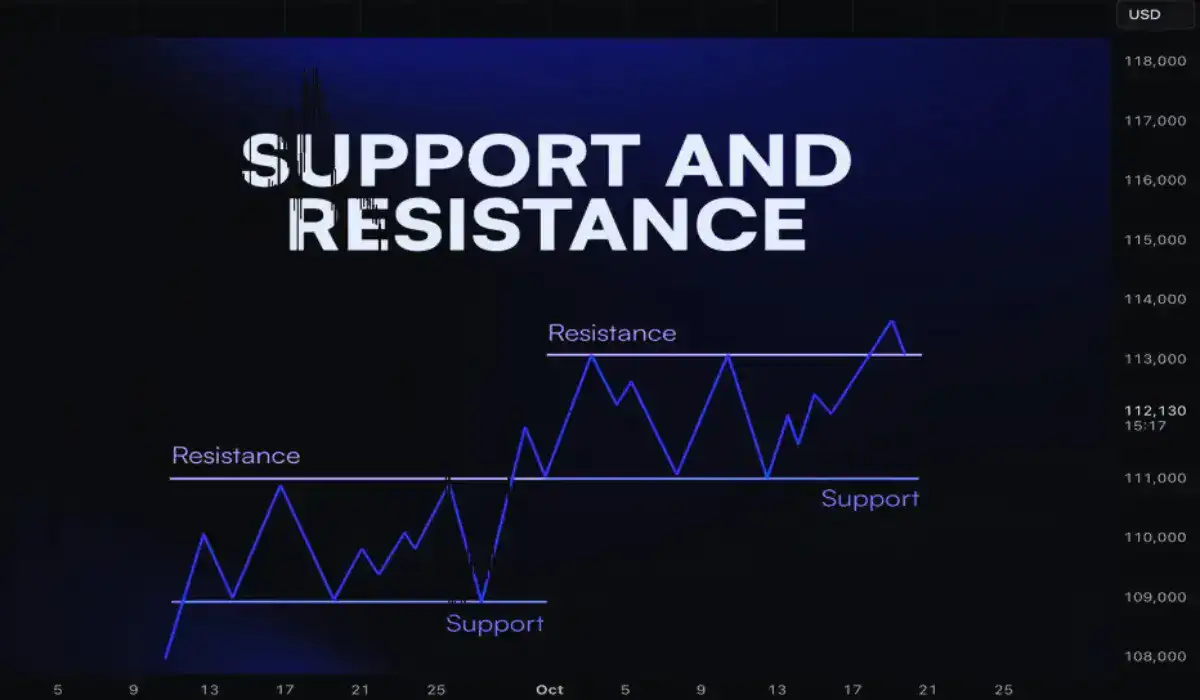
Support and resistance levels are two important aspects in technical analysis. They are used to spot entry points, exit targets, price reversal zones, and risk management areas. By understanding these concepts, you can make wise decisions while trading stocks, crypto, forex, commodities, or other assets. This article details what support and resistance levels are, why