

by Leon Ashcombe
Share
by Leon Ashcombe
Share
Most financial markets experience unexpected rises and falls, making investing quite complex. Most newbies struggle with the question, ‘When is the best time to invest?’ This is where the relevance of dollar-cost averaging comes. It is a simple investment approach that helps lower emotional decision-making and market timing risks. Keep reading to find out more about dollar-cost averaging, including how it works and the benefits and disadvantages.
What is Dollar-Cost Averaging (DCA)?
This is a simple yet important strategy where investors invest a fixed amount at regular intervals, irrespective of market conditions. So, instead of investing a huge amount at once, this strategy spreads investments over time. This suggests that you buy more shares when prices are low and fewer shares when prices are high.
For example, instead of investing $6000 in one transaction, you can invest $500 every month for 12 months.
Dollar-cost averaging is commonly used in:
- Mutual funds
- Stock market investing
- Cryptocurrency trading
- ETFs
- Retirement accounts
How Dollar-Cost Averaging Works?
Consistency is key in dollar-cost averaging. Now, if you invest $500 every month into an index fund:
| Month | Share Price | Amount Invested | Shares Purchased |
| January | $50 | $500 | 10 |
| February | $25 | $500 | 20 |
| March | $40 | $500 | 12.5 |
| April | $50 | $500 | 10 |
With time, the average purchase price becomes lower than trying to spot the right market entry point. It eliminates the pressure of predicting short-term market movements.
Why Investors Use the Dollar-Cost Strategy?
Dollar-cost averaging is a common strategy used by investors because it helps develop a disciplined approach. Users can remain consistent regardless of market conditions. Here are the core reasons why investors use DCA:
- Lowers emotional decision-making
- Prevents investing all money at market highs
- Growing long-term wealth steadily
- Simplifying investing decisions
- Supporting regular saving habits
DCA is quite popular among beginners who want a simple investment plan.
Benefits of Dollar-Cost Averaging
Reduces market timing risk
It prevents the risk of investing a lump sum at the wrong time. As investments are spread out, you do not put all your money into the market during a peak.
Supports consistent investing
This method allows investors to develop discipline. Through automatic monthly investments, they can form a habit of saving and investing regularly.
Reduces emotional decision-making
Market volatility can cause investors to sell during downturns or hesitate during uncertain conditions. DCS reduces the stress during such times because investments continue automatically regardless of market conditions.
Makes investing affordable
DCA allows investors to start with a small amount, making investing accessible for both beginners and young investors.
Best for long-term goals
DCA is ideal for long-term goals such as college funds, retirement savings, passive investing, and wealth building.
Disadvantages of Dollar-Cost Averaging
While DCA has several advantages, it has some limitations as well.
- Lower potential returns in rising markets
- Requires patience
- Transaction fees can add up
Dollar-Cost Averaging vs Lump-Sum Investing
A common question among investors is, ‘Whether dollar-cost averaging or lump sum investing is better?’
Dollar-cost averaging
- Less emotional stress
- Reduced market timing risk
- Ideal for cautious investors
- Best for regular income earners
Lump-sum investing
- Higher long-term returns
- Immediate market exposure
- Best when markets trend upward
Research and real-life experiences confirm that lump-sum investing outperforms DCA over longer periods. However, DCA is chosen by those who prefer stability and lower risk.
Your financial situation and risk tolerance level should be considered while choosing the strategy.
Is Dollar-Cost Averaging Good for Beginners?
Yes. DCA is said to be one of the best investment strategies for beginners. New investors often struggle with the best time to invest and also fear sudden market drops. DCA offers a disciplined and low-pressure approach.
Advantages for beginners include:
- Less stress
- Easier budgeting
- Simple automation
- Lower emotional risk
- Long-term discipline
DCA is automatically applied through paycheck contributions in many retirement plans.
Best Assets for Dollar-Cost Averaging
This method works well for long-term investments with growth potential. Popular assets include:
- ETFs
- Index funds
- Blue-chip stocks
- Cryptocurrencies (with caution)
- Retirement accounts
Market index funds are quite popular because they support diversification and lower risk in comparison with individual stocks.
Tips for Successful DCA Investing
These tips will help you boost the effectiveness of the dollar-cost averaging strategy:
- Automate the investments
- Prioritize long-term growth
- Select quality investments
- Review your portfolio periodically
Conclusion
Dollar-cost averaging is a simple yet powerful investment strategy that allows investors to increase wealth steadily over time. Through regular fixed investments, users can overcome timing risks, reduce emotional stress, and develop a disciplined investment habit. Although the lump-sum investment approach outperforms DCA in trending markets, DCA is best for beginners who want a stress-free, long-term investing experience.
STAY IN THE LOOP
Subscribe to our free newsletter.
Leave A Comment

In personal finance and investing, compound interest is an important concept. It helps people earn interest on their original money and also on the interest already added, thereby allowing savings to grow faster. Over the long term, compound interest helps turn small investments into large sums. Whether you are into stock trading, saving for an

The secret behind a successful trade is not just finding the right entry point but also knowing when a position should be exited. This is where the significance of stop loss and take profit strategies comes into play. A stop loss allows traders to limit losses when the market is not in their favor, while

Proper position sizing is one of the major factors contributing to long-term trading success. Even the best strategy doesn’t work without effective risk management. It is important to know how much money to risk per trade to safeguard your capital, boost long-term profitability, and reduce emotional biases. Position sizing is fixing how large your trade
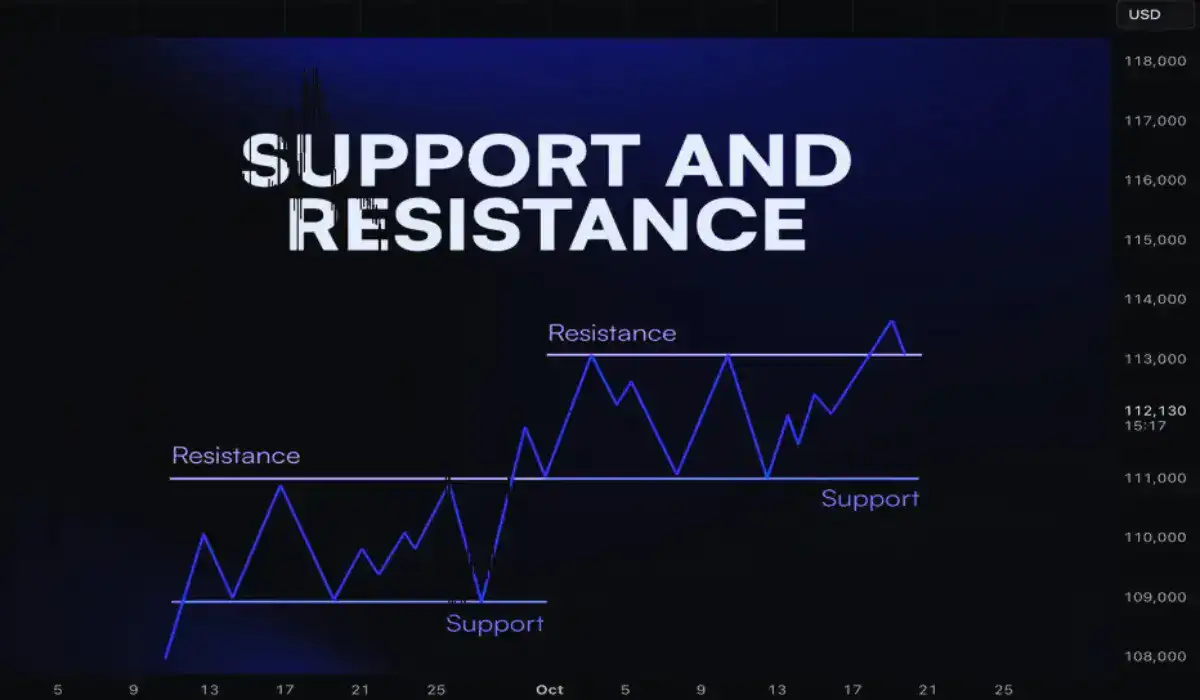
Support and resistance levels are two important aspects in technical analysis. They are used to spot entry points, exit targets, price reversal zones, and risk management areas. By understanding these concepts, you can make wise decisions while trading stocks, crypto, forex, commodities, or other assets. This article details what support and resistance levels are, why