The financial markets continue to grab attention from investors, economists, and businesses across the world. After many years of changing interest rates, economic uncertainty, geopolitical developments, and technological innovation, many people are asking the same question: ‘Is the market bull or bear in 2026?’
To answer this question, several aspects have to be considered. Some sectors are witnessing significant growth and investor confidence, while some are still facing challenges. Gaining clarity about the current market trends can help investors make wise decisions and get ready for potential opportunities and risks.
What are Bull and Bear Markets?
Before getting into the current market trends, it is important to understand what bull and bear markets are.
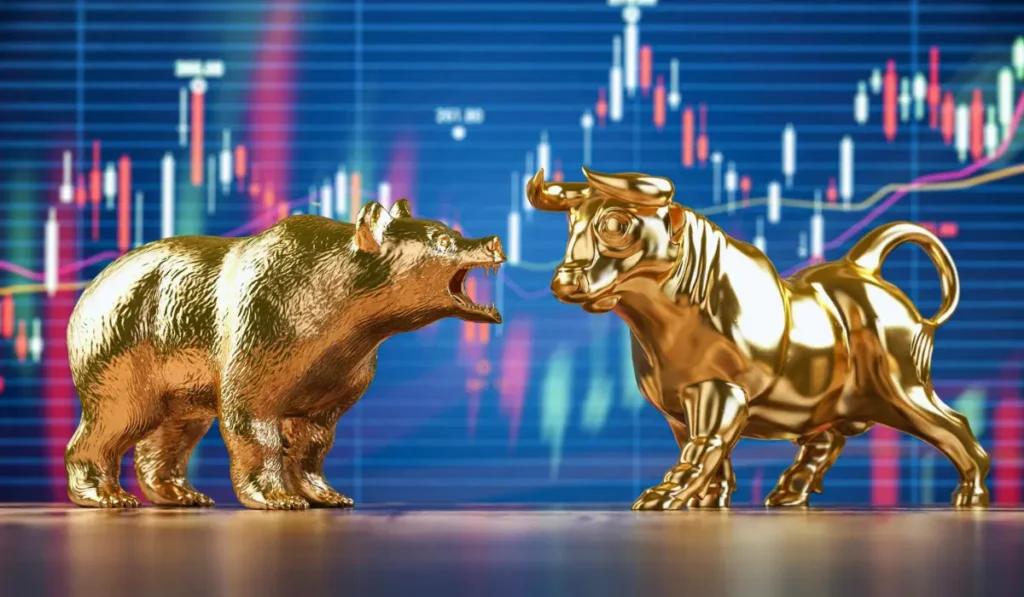
A bull market is a trend that happens when stock prices increase consistently over a long period. During this period, economic conditions are favorable, investor confidence is high, and businesses generally report high earnings.
A bear market is the exact opposite, where stock prices drop significantly. The investor sentiment is weak, economic growth slows down, and market uncertainty increases.
The truth is that markets rarely move in one direction. At a particular time, different industries and asset classes can perform differently.
Economic Growth Driving Market Sentiment
Economic growth is a major factor that affects market sentiment in 2026. Even during times of global challenges, many economies have exhibited resilience. This is evident from stable consumer spending, healthy employment levels in many regions, and business investment supporting economic activity.
One thing that has helped maintain investor confidence is moderate economic growth. Companies with high financial performance are attracting capital, while sectors associated with innovation and digital transformation keep expanding. That being said, the rate of growth varies across countries. As a result, both opportunities and risks await investors.
Interest Rates and Inflation
After years of strict monetary policies to manage inflation, central banks have adopted a more balanced approach. Inflation has moderated, thereby reducing pressure on businesses and consumers. As a result, market sentiment and equity valuations have improved. Though this is the case, investors are closely monitoring central bank decisions because unexpected policy changes can lead to market volatility.
Technology Sector
It is one of the biggest contributors to market growth. Major investment areas include cloud computing, artificial intelligence, automation, cybersecurity, and data analytics. In recent years, companies creating AI-based products and services have been attracting major investor interest. To boost productivity and lower operational costs, businesses around the world are adopting advanced technologies. This is why many technology stocks are performing extremely well.
Energy and Commodity Market Trends
A mixed performance is seen in the energy market. The main contributors to the global economic activity are traditional energy companies. At the same time, renewable energy investments keep growing.
There is a strong demand for important minerals used in batteries, electric vehicles, and clean energy infrastructure. This has resulted in opportunities in the mining and resource sectors.
That being said, commodity prices keep reacting to geopolitical events, changes in global demand, and supply chain developments. In these markets, investors should expect periodic fluctuations.
Consumer Spending and Retail Performance
In 2026, consumers are focusing on value while purchasing products and services that enhance convenience and quality of life. Sectors performing well include digital payments, E-commerce, and subscription-based services. String revenue growth is maintained by retail companies quickly adapting to changing consumer needs.
Risks That Could Create Bearish Pressure
Though various factors suggest bullish trends, several risks could create bearish conditions in certain sectors and industries. These include geopolitical uncertainty, slower global growth, high market valuations, and regulatory changes.
Is the Market Bull or Bear in 2026?
The market in 2026 is neither completely bullish nor bearish. It shows a selective and opportunity-based environment. Bullish momentum is displayed by growth-focused sectors like artificial intelligence, technology, and digital services. However, widespread optimism is prevented by concerns about geopolitical risks, valuations, and economic slowdowns. The focus should be on quality, long-term fundamentals, and diversification.
Investment Strategies
Here are some important investment strategies for those looking to explore current market conditions:
- Diversify portfolio across multiple sectors and assets
- Prioritize companies with strong sheet balances and consistent earnings
- Track inflation and interest rate developments
- Focus on long-term trends, such as clean energy and artificial intelligence
- Maintain a disciplined investment approach during periods of high volatility
Balancing growth opportunities with risk management is crucial for success in the current investment world.
Conclusion
So, it is evident that the current market is neither fully bullish nor bearish. While technological innovation, moderating inflation, and economic growth suggest positive growth, ongoing risks indicate a bearish condition as well. Investors who remain informed, diversify their portfolios, and prioritize long-term trends can earn more profits while managing potential risks. Investment success in 2026 depends entirely on adaptability and smart decision-making.