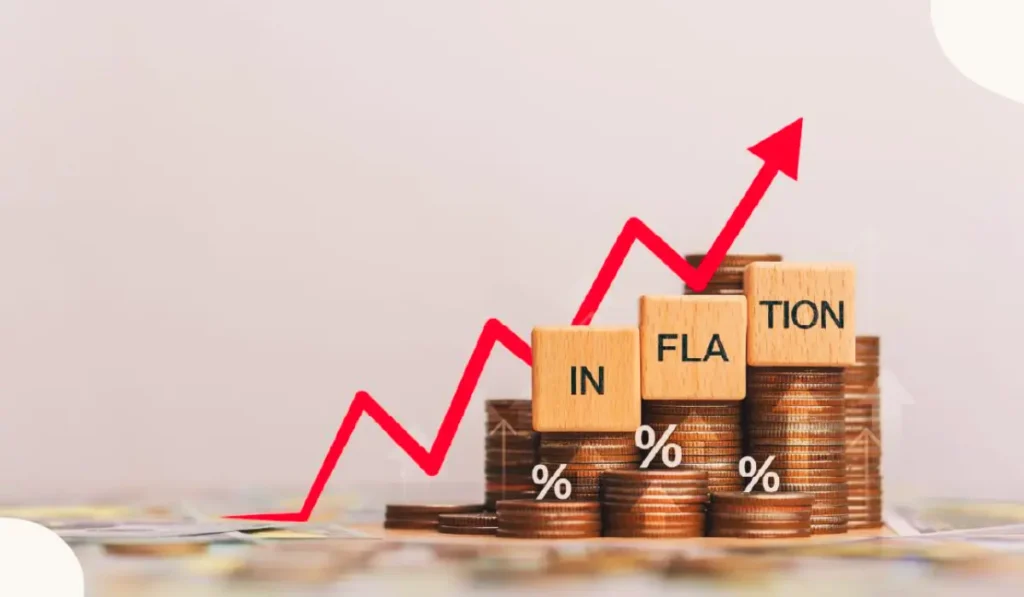
Inflation is an important concept that affects everyday life, but people notice it only when prices suddenly rise. Whether it is fuel, groceries, rent, or entertainment, inflation slowly changes the cost of living over time. Though small inflation is normal in a healthy economy, it still lowers the value of money and affects how far your income can stretch.
Understanding inflation is crucial for making smart financial decisions. It influences your spending habits, savings, debt, and even long-term investments. When you have clarity about how inflation works, you can prepare in advance for rising costs and protect your financial future.
What is Inflation?
In simple terms, inflation is the gradual increase in the prices of goods and services over time. Each unit of money buys fewer things than it did before when inflation rises. That is, your money loses purchasing power. For example, what costs $50 today might cost $56 the next year, depending on the inflation rate. As already stated, inflation is quite normal in a society, but when it increases quickly, it can create financial problems for individuals, businesses, and families.
Why Inflation Happens?
Inflation occurs due to several reasons. Let us look at the main causes of inflation:
- Demand-pull inflation– This happens when people spend more money than the economy can supply in goods and services. High demand leads to a rise in prices.
- Cost-push inflation– This is caused by an increase in production costs, such as higher fuel prices, wages, or raw materials. As a result, businesses increase prices to maintain profit.
- Built-in inflation– When workers expect higher wages and businesses expect higher costs, prices and wages can continuously push each other upward.
How Inflation Affects Your Everyday Money?
Inflation affects every part of personal finance in various ways. It is quite evident at checkout counters. Rent, fuel, groceries, and utilities become more expensive over time.
1. Reduced Purchasing Power
This is among the most noticeable effects of inflation. In case your income does not increase at the same rate as inflation, you might not be able to purchase as much as you used to. As a result, your standard of living declines even when your salary remains the same.
2. Higher Cost of Living
The cost of living increases as the price of transportation, food, and housing rise. So, to keep up, people have to look for new income sources, cut expenses, or adjust their budgets.
3. Impact on Savings
Money stored in savings accounts will lose value due to inflation. If your savings earn an interest rate lower than inflation, your money is losing value over time. For example, if inflation is 6% but your savings account earns an interest of 4%, you are losing 2% in real value every year.
4. Effect on Debt
Inflation’s effect on debt is mixed. In case you have fixed-rate loans, inflation can benefit you because you repay the loan with money that is worth less than when you borrowed it. However, if interest rates rise with inflation, borrowing can become more expensive.
Inflation and Wages
During inflation, wages try to keep up with it, but do not match exactly. When wages increase more slowly than inflation, workers earn less. This can result in financial stress in households where income is fixed or there is limited salary growth. At the same time, in some industries where labor demand is high, wages may rise faster. So, workers can maintain or improve their financial situation.
How Inflation Affects Investments?
Inflation plays a major role in investing because it affects returns.
- Stocks– Companies may increase prices during inflation, which supports profits, but it can also reduce margins.
- Bonds– During high inflation, fixed-interest bonds lose value because their returns become less attractive.
- Real Estate– Rents and property rates often increase during inflation, making real estate a common hedge.
- Cash Savings– This is the most affected asset because it loses purchasing power over time.
How to Protect Your Money from Inflation?
Though inflation cannot be avoided, its effects can be reduced.
- Instead of holding cash, invest in assets like stocks, real estate, or index funds.
- Build a diversified portfolio by spreading money across multiple assets.
- Increase income sources to keep up with the rising costs.
- Utilize high-interest savings options.
- Track expenses and adjust spending habits.
Long-Term Effects of Inflation
Over time, inflation reshapes personal finances and the economy. It promotes spending and investing rather than holding cash. Inflation also impacts government policies, wage negotiations, and interest rates.
For individuals, long-term inflation means the necessity of financial planning. Growth-focused financial strategies are required to maintain purchasing power.
Conclusion
Though inflation is a natural economic process, it has a serious impact on everyday life. It affects how much you can buy, how far your income increases, and how your savings grow over time. By understanding inflation and taking the necessary steps, you can safeguard your money and achieve financial stability even during unfavorable economic conditions.