
by Leon Ashcombe
Share
by Leon Ashcombe
Share
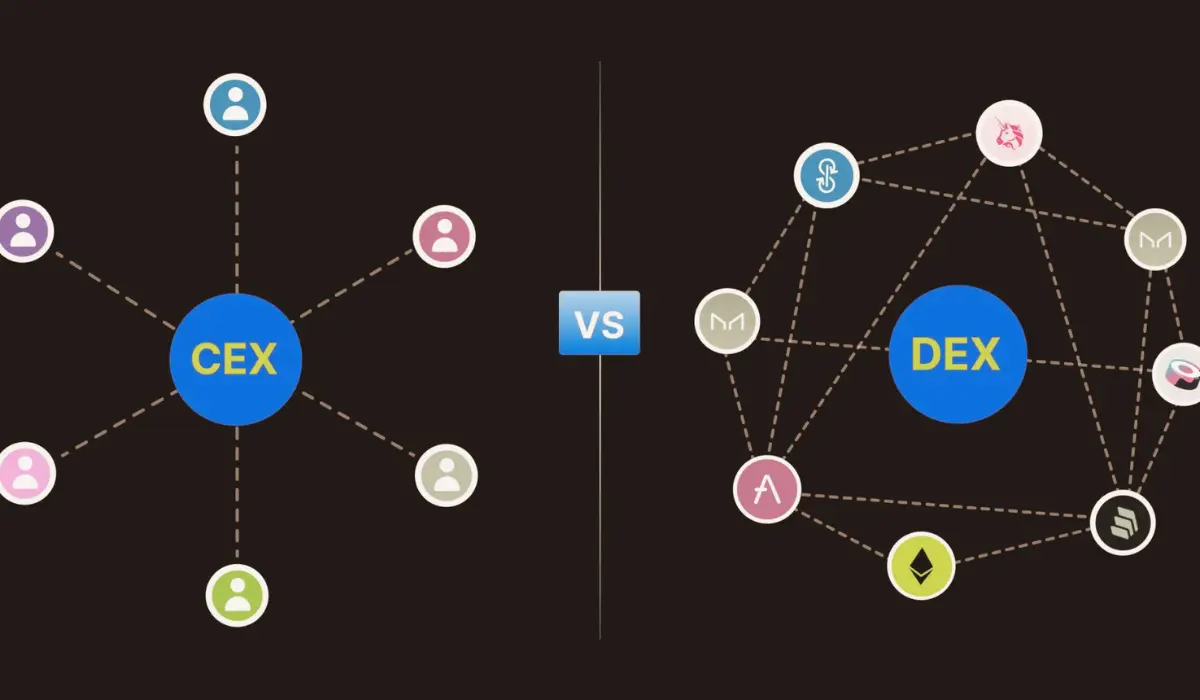
In the past several years, the crypto market has grown rapidly, and crypto exchanges have gained prominence in buying, selling, and trading digital assets. There are two major exchanges in this landscape: Centralized Exchanges (CEXs) and Decentralized Exchanges (DEXs). While both support cryptocurrency trading, their workings are completely different. This guide explores what these exchanges are, how they work, their pros and cons, major differences, and which is more beneficial.
What is Centralized Exchange (CEX)?
This is a crypto trading platform managed by a company or an organization. They function as intermediaries between buyers and sellers, and manage transactions on behalf of users. Some examples include Coinbase, Binance, and Kraken.
Users can easily create accounts, complete identity verification, invest funds, and trade cryptocurrencies through the platform. The exchange handles users’ funds and maintains custody of assets in wallets managed by the company.
Key Features of CEXs
- User-friendly interfaces
- High trading volume and liquidity
- Fast transactions
- Fiat currency support
- Advanced tarding tools
- Customer support services
Centralized exchanges are best for beginners, as they simplify the trading process.
What is a Decentralized Exchange (DEX)?
A decentralized exchange (DEX) is a peer-to-peer platform that operates without a central authority or institution. It utilizes blockchain technology and smart contracts to support trades directly between users. Some major DEX platforms include PancakeSwap, Uniswap, and SushiSwap. Users can have complete control over their crypto assets through private wallets like Trust Wallet or MetaMask.
Key Features of DEXs
- No central authority or institution
- Non-custodial trading
- Better privacy
- Access to a wide range of crypto assets
- Smart-contract-based transactions
- Permission-less trading
DEXs are used in decentralized finance because they allow traders to trade directly from their wallets.
How Centralized Exchanges Work?
They work similarly to traditional stock trading platforms. Users can deposit funds into the exchange-controlled wallets, and the platform handles order matching internally. Through an order book system, the exchange matches the trade placed by a person with another user’s order.
Here are the steps involved:
- Create an account
- Complete the identity verification
- Deposit funds
- Place orders
- Exchange processes the order
- Assets are stored or withdrawn
Since the exchange controls the platform, transactions are faster and smoother.
How Decentralized Exchanges Work?
They use smart contracts to automate the trading process. DEX depends on Automated Market Makers (AMMs),where liquidity pools provide the assets needed for trades. Traders can connect their wallets directly to the platform and approve transactions through blockchain networks.
The steps to follow include:
- Connect the crypto wallet
- Select trading pair
- Approve smart contract access
- Execute orders on the blockchain
- Assets stay in the user’s wallet
Such a process removes intermediaries, but many have higher blockchain transaction fees during network congestion.
Advantages of Centralized Exchanges
- Simple for beginners because they offer simple dashboards, educational resources, and mobile apps
- High liquidity, allowing users to buy and sell assets quickly with minimal price slippage
- Quality customer support for technical issues, account recovery, and transactions
- Integration of fiat currencies, like USD, EUR, and CAD
- Advanced trading tools like margin trading, futures trading, and market analytics
Disadvantages of Centralized Exchanges
- Security risks as they are major targets of hackers
- Lack of full control because the platform has custody of private keys
- Downtime and freezes during periods of high market volatility
- Regulatory restrictions in some regions and the requirement of identity verification
Advantages of Decentralized Exchanges
- Complete asset control
- Better privacy
- Access to new crypto assets
- Lower counterparty risk
- Open and permissionless
Disadvantages of Decentralized Exchanges
- Complex user experience
- Lower liquidity
- Smart contract risks
- No customer support
CEX vs DEX: Major Differences
| Feature | CEX | DEX |
| Control of Funds | Exchange controls assets | Users control assets |
| Identity Verification | Required | Often not required |
| Ease of Use | Beginner-friendly | More technical |
| Trading Speed | Faster | Depends on blockchain |
| Privacy | Lower | Higher |
| Liquidity | High | Moderate to high |
| Customer Support | Available | Limited or none |
| Security Responsibility | Exchange | User |
Is CEX or DEX better?
As we have seen, both have their own positives and negatives. The one that suits you depends on your goals and experience levels. Centralized exchanges are best for novice traders who want convenience, fiat currency access, and 24/7 customer support. At the same time, decentralized exchanges are opted for by those seeking privacy, decentralized finance opportunities, and self-custody. Well, some experienced traders use both CEX and DEX to benefit from the strengths of both platforms.
Conclusion
In the cryptocurrency, centralized and decentralized exchanges play a crucial role. CEXs provide convenience, beginner-friendly features, and liquidity, while DEXs offer transparency, privacy, and better control over digital assets. As blockchain technology keeps evolving, both exchanges are sure to develop and coexist. It is important to consider your financial goals and experience levels while choosing an exchange.
STAY IN THE LOOP
Subscribe to our free newsletter.
Leave A Comment
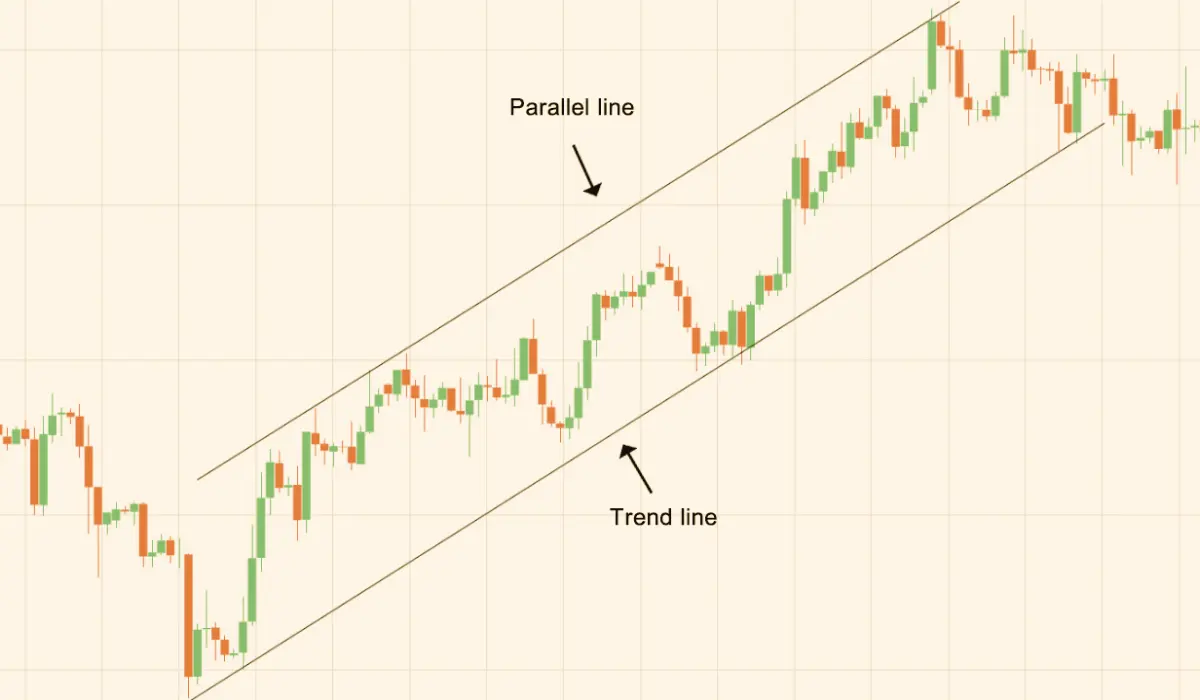
In technical analysis for trading, trend lines and channels are two important aspects. Traders use them to gain clarity about market direction, spot potential entry and exit points, and identify price patterns early. While trading crypto, forex, stocks, or other assets, learning how to draw trend lines and channels can greatly improve your chart reading
The digital finance landscape has witnessed major transformations with the entry of cryptocurrency. It has introduced thousands of digital assets to investors, everyday users, and businesses. That being said, many still use the terms ‘coin’ and ‘token’ interchangeably, even though their functions are different in the blockchain ecosystem. Understanding the difference between the two is
The crypto market is growing rapidly, with the need for the right exchange becoming extremely important. Whether you are a DeFi expert, a futures trader, or a beginner, the platform you select can impact your trading experience, security, fees, and profits. The top exchanges in the market today are Binance, Bybit, and Hyperliquid, for various

Cryptocurrency wallets are important for those buying, storing, or trading digital assets like Ethereum and Bitcoin. However, most traders get confused by terms like ‘hot wallet’, ‘cold wallet’, ‘custodial wallet’, and ‘non-custodial wallet’. Understanding these wallet types is crucial because they affect the accessibility, control, and security of your crypto assets. In this article,