
Cryptocurrency wallets are important for those buying, storing, or trading digital assets like Ethereum and Bitcoin. However, most traders get confused by terms like ‘hot wallet’, ‘cold wallet’, ‘custodial wallet’, and ‘non-custodial wallet’. Understanding these wallet types is crucial because they affect the accessibility, control, and security of your crypto assets. In this article, we will get into the details of these wallets, the differences between them, and how to choose the right wallet for your requirements.
What is a Crypto Wallet?
It is a tool that allows traders to store and handle their cryptocurrency. It differs from a traditional wallet that holds physical cash. A crypto wallet stores the private keys necessary to access digital assets on the blockchain. They are available in different forms, including mobile apps, browser extensions, desktop software, and physical hardware devices.
There are two main categories of crypto wallets:
- Hot vs cold wallets
- Custodial vs non-custodial wallets
Each offers different services depending on your security and convenience preferences.
Hot Wallets Explained
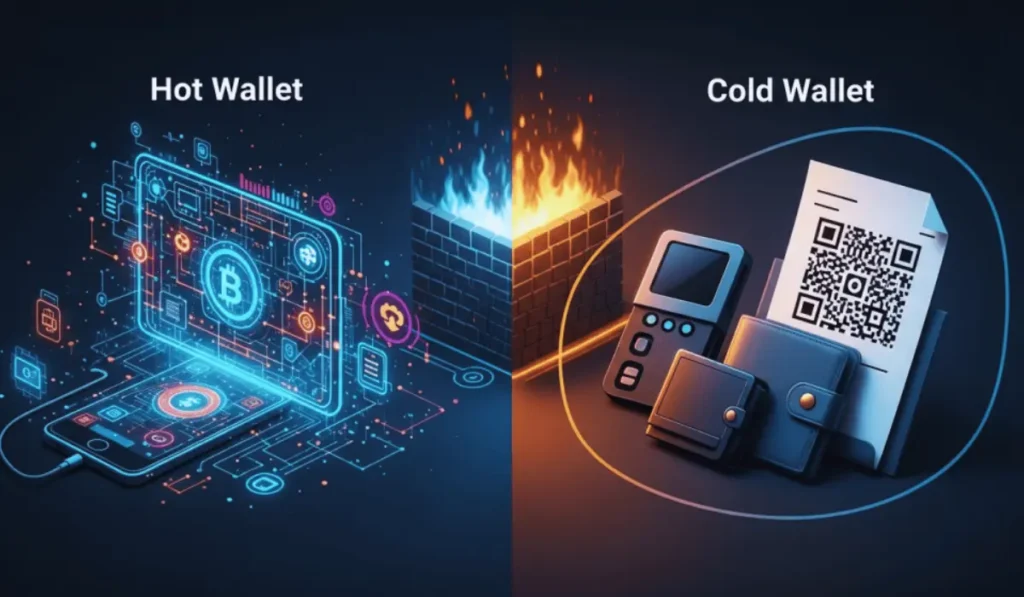
This is a digital crypto wallet connected to the internet. It is developed for easy access and quick transactions. Some examples of hot wallets include mobile wallet apps, browser extensions, desktop software wallets, and exchange wallets.
Advantages of Hot Wallets
- Easy access
- Beginner-friendly
- Quick transactions
- Suitable for daily use
Disadvantages of Hot Wallets
- Higher security risks
- Exchange risks
- Limited long-term protection
Cold Wallets Explained
This is a crypto wallet that remains offline. It is usually used for secure long-term storage. Different types of cold wallets include paper wallets, hardware wallets, and air-gapped storage devices.
Advantages of Cold Wallets
- Maximum security
- Best for long-term holding
- Safety against exchange failures
Disadvantages of Cold Wallets
- Less convenient
- Can be expensive
- Risk of physical loss
Custodial Wallets Explained
A custodial wallet, as the name suggests, is a wallet where a third party manages your private keys on your behalf. Cryptocurrency exchanges offer custodial wallets.
In this, when you store crypto on an exchange, the company controls the wallet security and private keys. Users can log in with a username and password rather than directly managing blockchain credentials.
Advantages of Custodial Wallets
- Simple account recovery
- Convenient for beginners
- Integrates trading features
Disadvantages of Custodial Wallets
- Limited control
- Counterparty risky
- Reduces privacy
Non-Custodial Wallets Explained
A non-custodial wallet is one where users have complete control over their private keys and cryptocurrency. With this, only the owner can access the funds.
Advantages of Non-Custodial Wallets
- Full ownership
- Better privacy
- Improved security control
Disadvantages of Non-Custodial Wallets
- The user is completely responsible
- More technical knowledge required
- Human error risks
Hot Wallet vs Cold Wallet: Major Differences
| Feature | Hot Wallet | Cold Wallet |
| Internet Connection | Connected | Offline |
| Security | Low | High |
| Convenience | High | Moderate |
| Best Use Case | Daily transactions | Long-term storage |
| Risk of Hacking | High | Low |
A hot wallet focuses on convenience, while a cold wallet focuses on security.
Custodial vs Non-Custodial Wallet: Major Differences
| Feature | Custodial Wallet | Non-Custodial Wallet |
| Private Key Control | Third-party | User |
| Account Recovery | Easier | Difficult |
| User Responsibility | Lower | Higher |
| Security Dependence | Provider | User |
| Privacy | Lower | Higher |
The major difference is control of private keys and ownership.
Which Crypto Wallet is Best for You?
The best crypto wallet depends on your experience level and goals.
- Select a hot wallet if you trade frequently, require quick access to funds, and are a beginner learning crypto.
- Choose a cold wallet if you hold large amounts of crypto, prioritize long-term security, and rarely move funds.
- Take a custodial wallet if you want a simple experience, are comfortable trusting an exchange, and prefer account recovery options.
- Choose a non-custodial wallet if you want complete control over your funds, value privacy and decentralization, and are comfortable managing private keys.
Common Crypto Wallet Security Tips
Whichever crypto wallet you choose, follow these tips to protect your cryptocurrency:
- Backup your recovery phrase
- Activate two-factor authentication
- Beware of phishing scams
- Keep software updated
- Avoid storing large funds on exchanges
- Set strong passwords
By following these measures, you can significantly reduce the risk of losing your crypto assets.
Final Thoughts
For safe cryptocurrency management, understanding the difference between hot, cold, custodial, and non-custodial wallets is important. Hot wallets focus on convenience, while cold wallets prioritize strong security of funds. Custodial wallets simplify the user experience, while non-custodial wallets provide full ownership and control.
For many traders, combining wallet types works best. For example, a hot wallet for daily holdings, and a cold wallet for long-term protection. As cryptocurrency adoption is growing significantly, choosing the right wallet will remain one of the most important steps in protecting your digital assets.