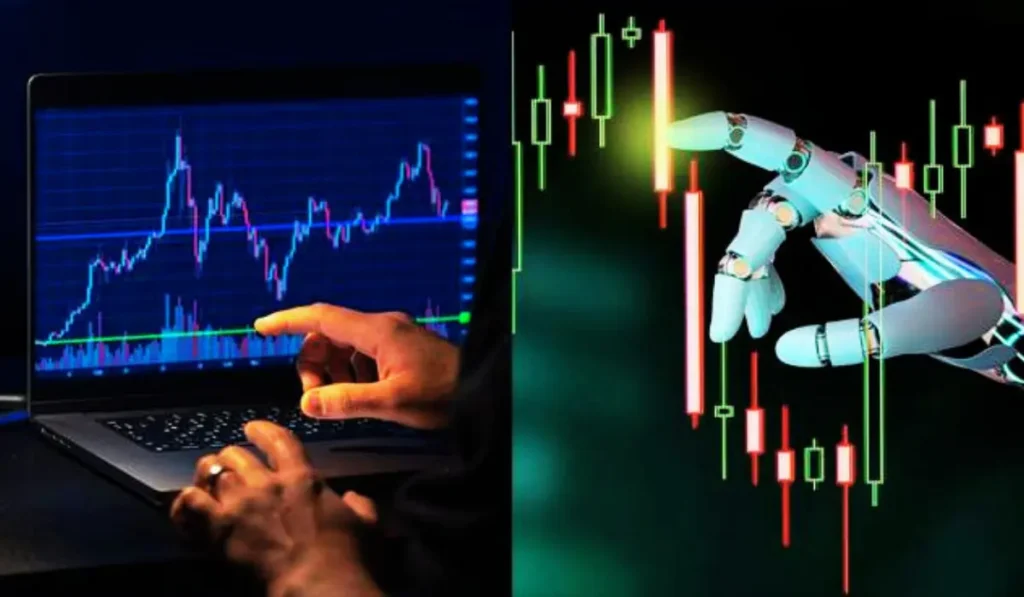
In the dynamic world of financial markets, traders are constantly on the search for the best ways to boost profits and minimize risks. The two most popular approaches include manual trading and automated trading. Though both methods have the same purpose, they differ in execution, speed, decision-making, and overall efficiency.
So, which one is better? The answer depends on a trader’s goal, trading experience, and trading style. In this article, we will discuss both manual and automated trading in detail so that you can understand their strengths, limitations, and uses.
What is Automated Trading?
Automated trading or algorithmic trading, also known as algo trading, uses computer programs to place orders based on predefined rules. The rules can be based on price movements, technical indicators, market trends, or complex mathematical models. Once the platform is set up, it can analyze markets and execute trades automatically without human intervention.
Main features of automated trading include:
- Places trades automatically
- Can examine large amounts of market data quickly
- Operates 24/7 without fatigue
- Eliminates emotional decision-making
- Allows backtesting using historical data
This trading method is widely used by hedge funds, professional traders, and retail investors who want to streamline their trading strategies.
What is Manual Trading?
Manual trading is an approach where a trader personally examines markets and places trades. The trader makes all major decisions, including when to enter or exit a trade, adjust positions, manage risks, and optimize strategies. It depends on human judgment, experience, and market knowledge.
Core features of manual trading include:
- Complete control over trading decisions
- Flexible strategy adjustments
- Ability to adapt to changing market conditions
- Requires constant market monitoring
- Uses human intuition and experience
This method is used by experienced traders because it allows them to quickly respond to unexpected events that algorithms may not detect.
Advantages of Automated Trading
Faster Execution
Speed is one of the biggest advantages of automated trading. Algorithms can spot opportunities quickly and place trades within milliseconds.
Removes Emotional Trading
Emotions, such as fear, greed, and panic, lead to poor decision-making. Automated platforms use predefined rules and do not respond emotionally to market movements.
Continuous Market Monitoring
Automated trading systems can monitor multiple assets and markets continuously without fatigue.
Backtesting Capabilities
These systems allow traders to test strategies using historical data before using them in live trades. This helps spot strengths, weaknesses, and potential risks.
Increased Efficiency
Algorithms used by automated platforms can analyze thousands of market conditions quickly, which is not possible for a human trader.
Advantages of Manual Trading
Better Adaptability
Human traders can quickly adapt to changing market conditions and adjust strategies when unexpected events happen.
Use of Market Experience
Experienced traders develop an intuition over time that helps them spot opportunities not visible through technical indicators alone.
Greater Control
Traders can have complete control over their trading activities. They can override a strategy if market conditions change unexpectedly.
Lower technical dependence
Manual trading does not require software, coding knowledge, or system maintenance. This lowers the risk of technical errors that affect trades.
Disadvantages of Automated Trading and Manual Trading
Automated Trading
- Technical failures
- Over-optimization risks
- Limited flexibility
Manual Trading
- Emotional bias
- Time-consuming
- Slower execution
- Decision fatigue
Automated Trading vs. Manual Trading
| Factor | Automated Trading | Manual Trading |
| Speed | Very fast | Slow |
| Emotional Influence | None | High |
| Market Monitoring | 24/7 | Limited |
| Flexibility | Moderate | High |
| Human Judgement | Minimal | Essential |
| Technical Requirements | High | Low |
| Time Commitment | Lower | Higher |
| Consistency | High | Varies |
Who is Automated Trading Suitable For?
Automated trading is ideal for:
- Traders looking for systematic strategies
- People with technical or coding knowledge
- Those seeking faster execution
- Investors interested in portfolio diversification
- Individuals who want to minimize emotional trading
Who is Manual Trading Suitable For?
Manual trading is the best option for:
- Novice traders learning market behavior
- Traders operating in unpredictable market environments
- Investors focused on news and fundamental analysis
- Individuals who want full control over decisions
- Traders who depend on market intuition
Can You Combine Both Approaches?
Yes. Many successful traders combine both automated and manual trading to benefit from the strengths of both. For example, traders may use automated platforms to spot opportunities and place trades while manually evaluating market conditions before making trading decisions. This helps improve efficiency without compromising manual oversight.
Conclusion
So, the answer to which approach wins is that it depends on the goals, experience, and training style of users. Automated trading is ideal for those who need automation support, in-depth insights, faster trade execution, diversifying their portfolios, and reducing emotional decision-making. Manual trading, on the other hand, is ideal for those with in-depth market knowledge, who require complete control over their trading activities, investors focused on news and fundamental analysis, and those operating in unpredictable market environments. Many modern traders combine automated and manual trading to benefit from the strengths of both approaches.